
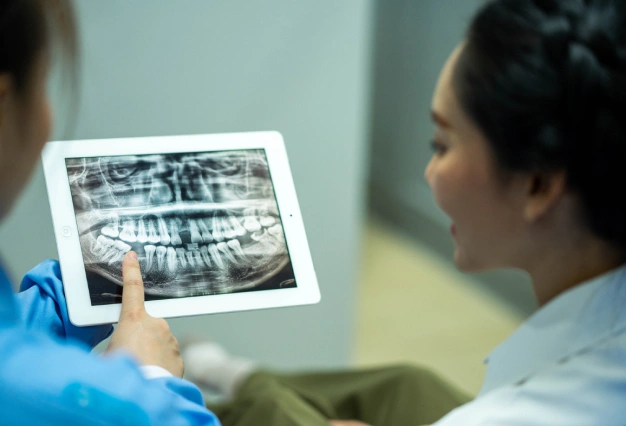
See How Digital X-Rays Can Help to Improve Your Dental Experience
Digital x-rays are transforming how dental professionals approach diagnostics. Replacing traditional film, digital x-rays capture clear, detailed images of teeth and surrounding structures with precision. These images are quickly transferred into an imaging program, offering analysis tools for thorough evaluation. Not only do these advanced x-rays ensure superior diagnostic accuracy, but they also reduce radiation exposure by up to 80% compared to conventional x-rays, prioritizing patient safety.
How Digital X-Rays Work
Using a compact radiographic camera, slightly larger than a pen, dental professionals can capture clear images of each tooth. This modern technology eliminates the need for chemical development and processing typically associated with traditional x-rays. Instead, as soon as the scan is completed, the images are instantly displayed on a computer screen, enabling immediate review. Adjusting the imaging wand's angle allows providers to capture every angle of each tooth, offering real-time results and eliminating waiting time for both patients and providers.
What Digital X-Rays Can Reveal
Identifying dental problems early on can save time, reduce costs, prevent unnecessary discomfort, and help preserve your teeth. Digital x-rays help to detect:
- Abscesses and cysts
- Bone loss
- Tumors (both cancerous and non-cancerous)
- Decay between teeth
- Developmental abnormalities
- Misalignment of teeth and roots
- Issues within the tooth or beneath the gum line
Key Benefits of Digital X-Rays
- Reduced Radiation Exposure: Digital x-rays expose patients to significantly lower radiation than traditional methods, enhancing safety.
- Improved Image Quality: The technology delivers superior, reliable results, allowing providers to identify abnormalities in teeth, gums, enamel, cavities, tumors, and hidden dental structures.
- Enhanced Image Resolution: With a 256-color grayscale, digital x-rays offer much greater detail and accuracy than the limited shades available in traditional film x-rays.
- Quick and Convenient: Once captured, the images are quickly sent to a monitor for review and discussion with the patient, ensuring clear communication and a better understanding of their oral health.
- Easy to Save and Compare: Digital images can be enlarged, adjusted, and stored for future reference, allowing for effective comparison with previous x-rays.
- Environmentally Friendly: Digital x-rays reduce waste and eliminate the need for harmful chemicals typically used in film development.
